

29 July, 2026 Survey and Land Registration Bureau Holds Introductory Session on the Prime Minister’s Government Cadres Development Program
Survey and Land Registration Bureau Holds Introductory Session on the Prime Minister’s Government Cadres Development Program
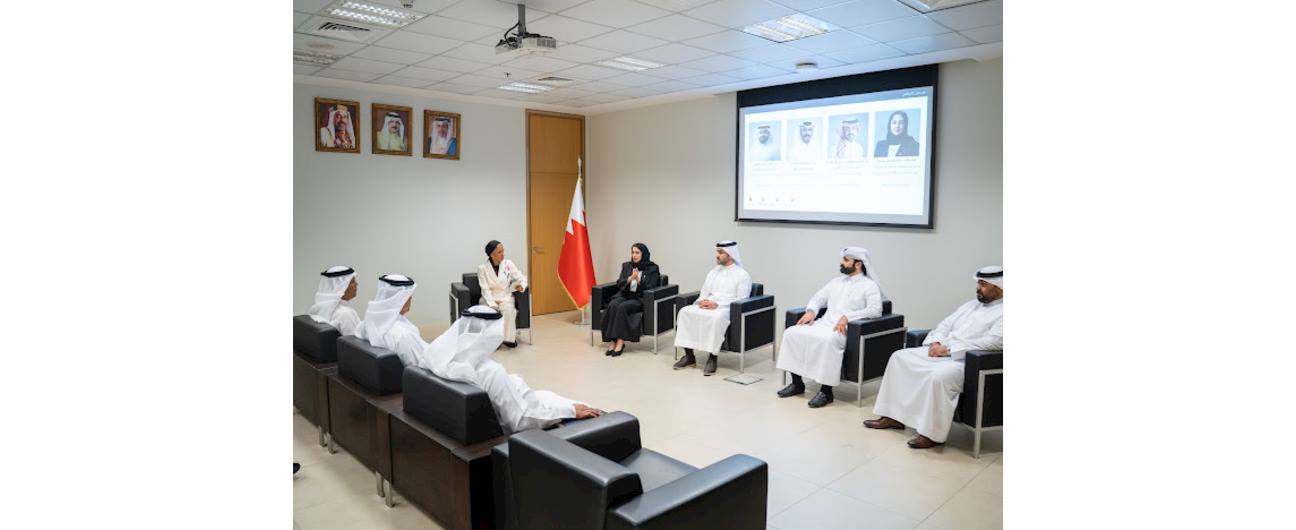
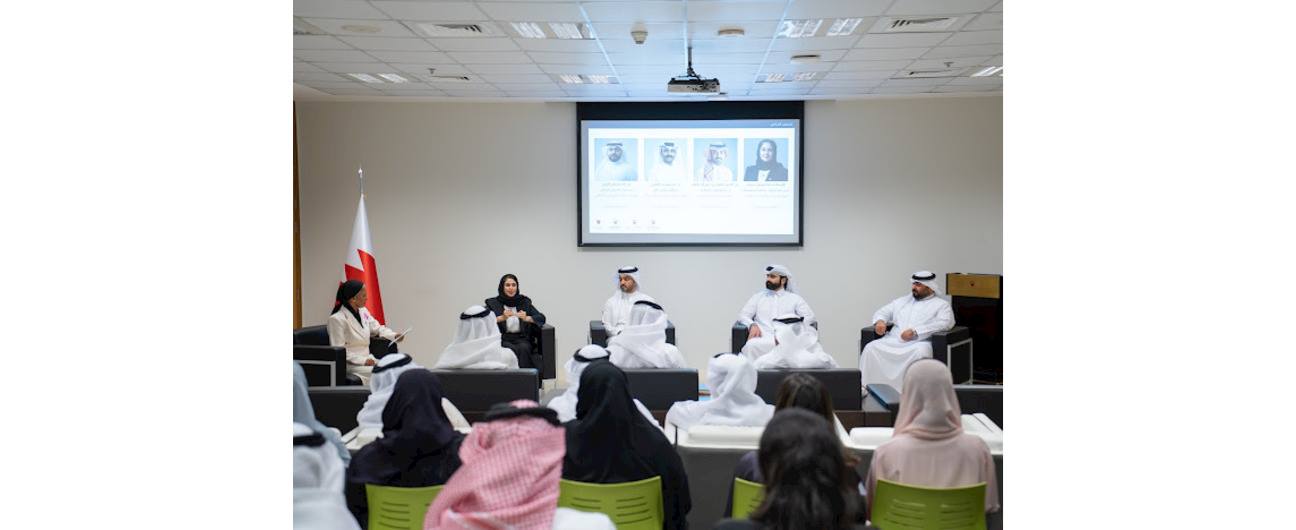
In line with the vision and directives of His Royal Highness Prince Salman bin Hamad Al Khalifa, the Crown Prince and Prime Minister, may God protect him, to strengthen investment in national talent and enhance the skills and capabilities of government employees in support of improving government performance and the quality of public services, the Survey and Land Registration Bureau (SLRB) organized an introductory session on the Prime Minister’s Government Cadres Development Program. The session featured a number of the program’s graduates and aimed to introduce its objectives, benefits, and development opportunities, while encouraging qualified national talents to apply for future cohorts.
On this occasion, His Excellency Engineer Bassem bin Yaqoub Al Hamer, President of the Survey and Land Registration Bureau, affirmed that investing in national talent is one of the key pillars of government development. He noted that preparing government professionals equipped with strategic thinking, innovation, and decision-making capabilities contributes to enhancing government performance and supports the Kingdom of Bahrain’s comprehensive development journey.
His Excellency explained that the program is one of Bahrain’s leading national initiatives for developing and preparing government talent by equipping participants with knowledge, expertise, and essential skills. It also provides them with opportunities to gain firsthand insight into government policymaking processes and to work closely with executive leaders, thereby preparing capable government cadres who can drive continuous development and contribute to achieving government objectives.
The session commenced with a presentation outlining the program’s objectives and its role in developing and preparing national government talent. It also highlighted key statistics and performance indicators related to the program, as well as its achievements in strengthening participants’ skills, expanding their expertise, and enhancing their strategic thinking, enabling them to assume greater responsibilities and contribute effectively to improving government performance.
The session also included a detailed explanation of the application process, how to complete the application form, the required information and documentation, and the key aspects applicants should consider when preparing their submissions. In addition, practical guidance and advice were shared based on the experiences of program graduates throughout the application and selection stages.
The session further highlighted several program graduates who currently hold executive positions across various government entities, demonstrating the program’s success in preparing highly qualified national professionals capable of supporting government development and contributing to decision-making processes.
During the session, the speakers shared their personal and professional experiences in the program, discussing key milestones, challenges they encountered, and the knowledge and skills they gained in leadership, strategic planning, research and analysis, institutional coordination, and decision support.
Participants also emphasized that the program had broadened their professional horizons, strengthened their ability to adapt to change, and enabled them to build valuable professional networks with colleagues from various government entities. These experiences, they noted, have had a positive impact on their performance and contributions within their respective organizations.
The session concluded with an interactive discussion, during which participants' questions about the program, its application process, and selection stages were addressed, encouraging more qualified national talents to take part in this distinguished development opportunity.