

09 December, 2025 Survey and Land Registration Bureau Organizes the First Regional Workshop within the MUDDI Standard Application Study Project in the Kingdom of Bahrain
Survey and Land Registration Bureau Organizes the First Regional Workshop within the MUDDI Standard Application Study Project in the Kingdom of Bahrain
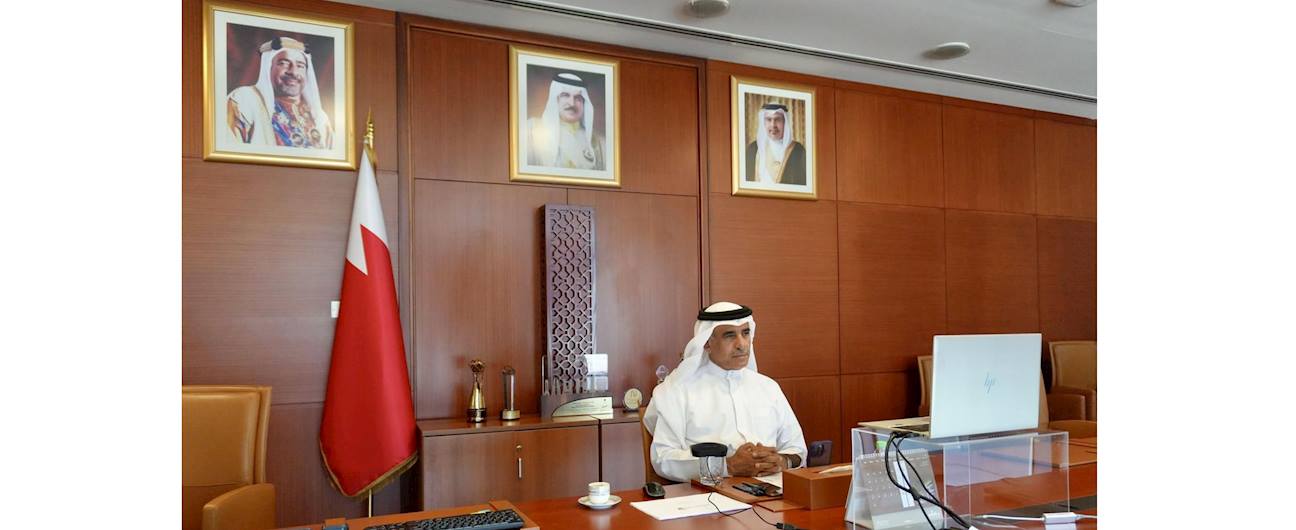
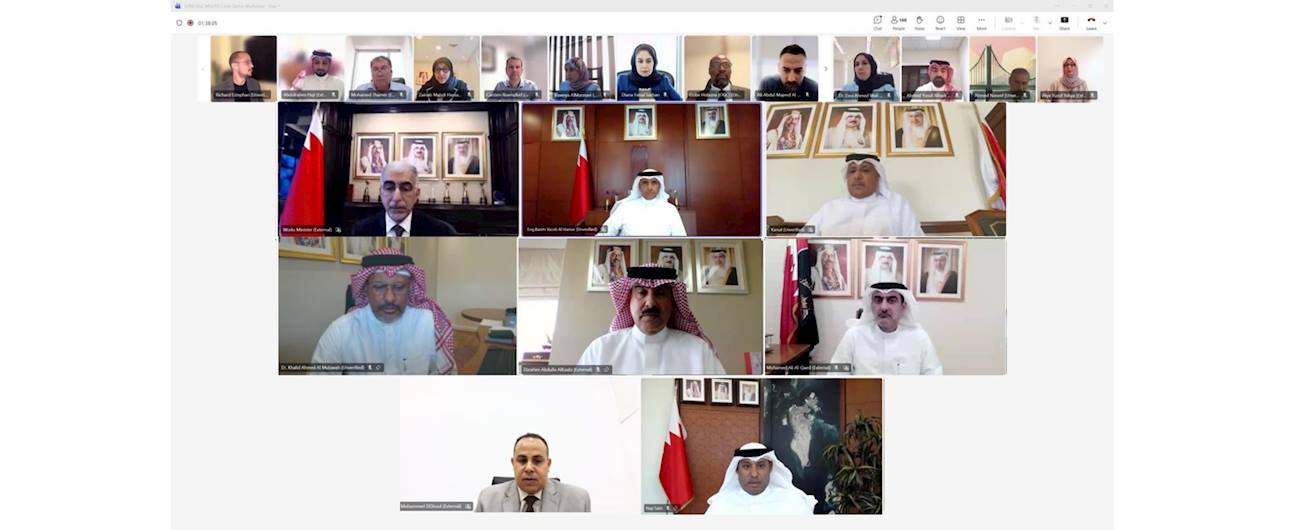
The Survey and Land Registration Bureau (SLRB), in cooperation with the Open Geospatial Consortium (OGC), organized a virtual workshop as part of the study project on applying the MUDDI standard in the Kingdom of Bahrain, with the participation of more than 350 officials, international experts, and representatives from government entities and the private sector.
This workshop is the first of its kind in the region and comes within national efforts aimed at supporting data governance in the infrastructure sector and enhancing sustainable development in alignment with Bahrain’s Economic Vision 2030. It also reflects the progress achieved by the Kingdom of Bahrain in this field.
In this regard, His Excellency Eng. Basim bin Yaqoub Al Hamer, President of the Survey and Land Registration Bureau, emphasized that this workshop reinforces integration and quality in monitoring, representing, and exchanging infrastructure data through unified standards. He explained that the MUDDI standard application study project contributes to building a national data ecosystem that supports decision-making, reduces costs, enhances service efficiency, and strengthens Bahrain’s readiness for future projects, placing it among the pioneering countries in adopting this global standard.
His Excellency also highlighted the importance of cooperation between government entities, the private sector, and academia in developing unified solutions that improve the quality and sustainability of infrastructure projects.
The workshop featured a high-level panel discussion with the participation of His Excellency Eng. Kamal bin Ahmed Mohammed, President of the Electricity and Water Authority; His Excellency Eng. Ibrahim bin Hassan Al Hawaj, Minister of Works; and Mr. Mohammed Ali Al Qaed, Chief Executive of the Information & eGovernment Authority.
During the panel discussion, His Excellency Eng. Kamal bin Ahmed Mohammed affirmed that the MUDDI standard represents a pivotal step toward enhancing the quality and reliability of infrastructure data. He noted that unifying standards and providing a shared platform for data exchange will contribute to improving planning and implementation, increasing operational efficiency, and reducing costs associated with data management between entities.
His Excellency added that the Authority maintains a comprehensive and continuously updated database to ensure data accuracy, enabling work teams to access essential information instantly and support effective decision-making.
For his part, His Excellency Eng. Ibrahim bin Hassan Al Hawaj, Minister of Works, stated that the MUDDI application study project in the Kingdom of Bahrain is a key step toward strengthening integration among service entities and enhancing the national infrastructure data ecosystem. He noted that the Ministry of Works is one of the main partners in issuing this standard and the primary organizer responsible for auditing its implementation, in addition to being both a major owner and user of data related to the planning and execution of infrastructure projects.
His Excellency explained that adopting MUDDI as a unified standard will enhance the quality of engineering data by harmonizing specifications and mechanisms for asset tracking, updating, and storage. This will contribute to reducing the overall time required to complete projects and provide a unified reference that supports efficient coordination among concerned entities. He also emphasized that improving data quality is essential to strengthening strategic planning and developing sustainable infrastructure solutions.
Regarding the transition of digital platforms into a unified standard such as MUDDI and its role in supporting accountability for data quality, Mr. Mohammed Ali Al Qaed, Chief Executive of the Information & eGovernment Authority, noted that the Authority is committed to governing national platforms to enhance accountability. He explained that integrating the MUDDI standard into the “Tasareeh” system—the centralized national digital platform for managing infrastructure project permits in the Kingdom of Bahrain—will help establish a comprehensive digital audit trail that accurately identifies data-providing entities and submission timestamps. This integration also enables automated digital tools to ensure that contractors comply with data delivery standards, ultimately improving the quality of geospatial infrastructure data within the Bahrain Spatial Data Infrastructure (BSD).